

sandblasting tempered glass
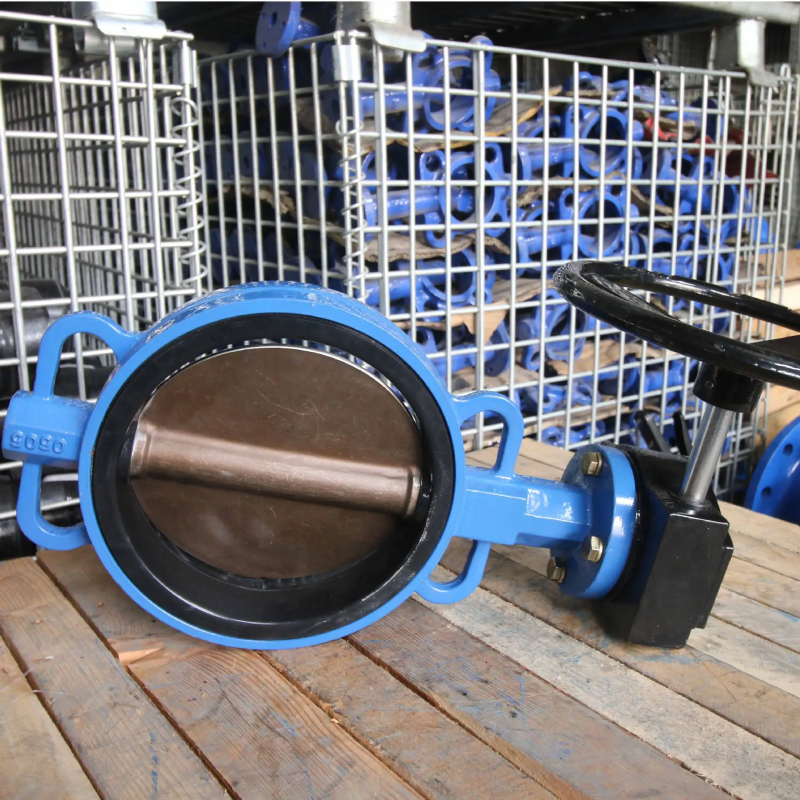
Butterfly Valve Manufacturers in China An Overview Butterfly valves have become one of the most widely used types of valves in various industries, owing to their simple design, lightweight nature, and efficient performance. Particularly in China, the manufacturing of butterfly valves has gained significant momentum, making the country a leading figure in the global valve industry. This article will provide an overview of butterfly valve manufacturers in China, their production capabilities, quality standards, and the various applications of these essential components. Understanding Butterfly Valves Butterfly valves consist of a circular disc or vane that rotates around a central axis to control the flow of fluid. These valves can be opened and closed quickly and are suitable for a range of applications, including water supply, wastewater treatment, chemical processing, and HVAC systems. The design of butterfly valves allows for a straight-through flow path, promoting minimal pressure drop and reduced turbulence, which enhances their efficiency. China’s Market Position China's butterfly valve manufacturing sector has seen remarkable growth due to several factors, including a robust industrial base, access to advanced manufacturing technologies, and a growing domestic market. A vast network of suppliers and manufacturers has emerged, catering to both local and international demands. Many Chinese manufacturers have established themselves as key players by offering a diverse range of products, from standard butterfly valves to custom solutions that meet specific requirements. Quality Standards and Certifications butterfly valve china manufacturer Quality is paramount in the valve manufacturing industry, especially for critical applications that involve high pressures and hazardous materials. Many Chinese butterfly valve manufacturers adhere to international standards such as ISO 9001, API 609, and ANSI/B16.34, ensuring their products meet global quality benchmarks. Additionally, many companies have gained certifications for specialized industries, such as the oil and gas sector, which further enhances their credibility and market reach. Advanced Manufacturing Capabilities Chinese manufacturers are increasingly investing in advanced manufacturing technologies, including automation, precision machining, and computer-aided design (CAD). These advancements enable them to produce high-quality butterfly valves with tighter tolerances and improved performance characteristics. Furthermore, many manufacturers are adopting lean manufacturing principles to optimize production processes, reduce waste, and enhance overall efficiency. Diverse Applications The versatility of butterfly valves makes them suitable for a wide array of applications across various industries. In the water treatment sector, they are commonly used for regulating the flow of water and managing pressure within pipelines. In the oil and gas industry, butterfly valves play a crucial role in controlling the flow of liquids and gases in pipelines. Additionally, they are widely employed in HVAC systems for controlling air flow and in food and beverage processing for hygienic operations. Conclusion As the global demand for efficient, reliable, and cost-effective valve solutions continues to grow, butterfly valve manufacturers in China are well-positioned to meet this demand. With their commitment to quality, investment in advanced manufacturing technologies, and ability to offer a wide range of products, these manufacturers are not only supporting the domestic market but also exporting their expertise worldwide. The future of butterfly valve manufacturing in China looks promising, driven by innovation and a focus on meeting the evolving needs of various industrial sectors. As industries continue to expand and evolve, China’s butterfly valve manufacturers will undoubtedly play a vital role in delivering efficient solutions for fluid control applications.
about
sandblasting tempered glass
Understanding Pilot Operated Check Valves Key Components in Hydraulic Control Systems In the realm of hydraulic systems, the functionality and reliability of components play a crucial role in maintaining system efficiency and safety. Among these components, pilot operated check valves stand out as sophisticated regulatory devices that offer enhanced control over fluid flow. This article delves into the intricate workings, applications, and benefits of pilot operated check valves, underscoring their significance in modern hydraulic machinery. **Introduction to Check Valves** Fundamentally, a check valve is a unidirectional valve that permits fluid flow in one direction while preventing backflow, ensuring process continuity and protecting system components from damage due to unintended pressure reversals. Simple check valves operate based on differential pressure, opening when the upstream pressure exceeds a certain threshold and closing automatically when this pressure drops or reverses. **Pilot Operated Check Valve An Overview** A step above conventional check valves, the pilot operated check valve (POCV) employs an additional level of control through a pilot mechanism. Unlike standard check valves that rely solely on fluid pressure for operation, POCVs use a separate, low-pressure signal (the pilot pressure) to control the main valve's opening and closing. This design introduces a higher degree of regulation and responsiveness, making them particularly valuable in complex hydraulic circuits. **Operating Principle** The heart of a POCV lies in its dual-chamber design. The primary valve body, akin to a traditional check valve, consists of a spring-loaded poppet that seals against a seat to halt reverse flow. However, this poppet is controlled not directly by the main line pressure but by a smaller, secondary valve – the pilot valve. The pilot valve responds to a separate, low-pressure signal, which when activated, relieves pressure behind the poppet, allowing it to open under the influence of the upstream pressure. This setup enables the POCV to remain closed even under high differential pressures until the pilot signal commands otherwise, providing precise control over the fluid's directional flow. Conversely, when the pilot pressure is relieved, the spring forces the poppet to seal, effectively halting any potential backflow Conversely, when the pilot pressure is relieved, the spring forces the poppet to seal, effectively halting any potential backflow Conversely, when the pilot pressure is relieved, the spring forces the poppet to seal, effectively halting any potential backflow Conversely, when the pilot pressure is relieved, the spring forces the poppet to seal, effectively halting any potential backflow pilot operated check valve . **Key Benefits and Applications** The precision control offered by POCVs makes them indispensable in several hydraulic applications 1. **Accumulator Isolation** In systems with accumulators, POCVs prevent pressurized fluid from flowing back into the pump during operation, ensuring efficient energy usage and system protection. 2. **Pressure Holding Circuits** They are used to maintain pressure in specific parts of a circuit, even when the main pump is deactivated, facilitating functions like brake locking or tool holding in machinery. 3. **Overload Protection** By integrating POCVs with relief valves, they can provide an additional layer of safety against excessive pressure spikes, safeguarding sensitive equipment. 4. **Cylinder Control** In hydraulic cylinders requiring precise motion control, POCVs can regulate the extension and retraction sequences, enhancing operational smoothness and accuracy. **Conclusion** Pilot operated check valves exemplify the integration of advanced technology into hydraulic systems, offering a blend of responsiveness, control, and safety. Their ability to precisely manage fluid flow based on external signals elevates their utility beyond conventional check valves, making them a preferred choice in numerous industrial and mobile hydraulic applications. Understanding the principles and benefits of POCVs is essential for engineers and technicians aiming to optimize system performance and reliability. As hydraulic systems continue to evolve, the strategic implementation of components like POCVs will play a pivotal role in achieving higher levels of efficiency and control.
-

High quality industrial productsagement

High quality industrial products
View Details -

Meet the diverse needs of customers

Meet the diverse needs of customers
View Details -

Strict quality control

Strict quality control
View Details -

Top raw materials

Top raw materials
View Details -

Trusted supplier

Trusted supplier
View Details
Our application


news and information
water main valve
Understanding the intricacies of water main valves is essential for both homeowners and professional

Y Type Strainer Compatibility with Corrosive Fluids
In industrial fluid systems where corrosive media like acids, alkalis, or saline solutions flow, mai

Válvula Strainer Tipo Y - Proteção Eficiente para Sistemas de Tubulação
Válvula de Strainer do Tipo Y Importância e Aplicações As válvulas de strainer, conhecidas também co
 English